Map
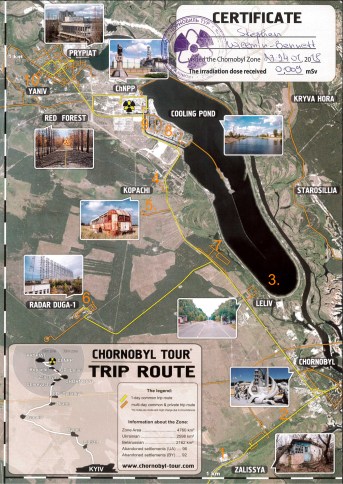
Here is the route map we took around the 30 km and 10 km exclusion zones. Everything between ChnPP and Leliv is considered the 10 km exclusion zone and everything after is the 30 km zone. It’s currently illegal to live within the 10 km zone and the maximum time you are able to spend there without having to leave is around 14 days (depending on weather as this can drastically effect the background radiation levels). However you can live within the 30 km zone but have to live under martial law. Although Chernobyl is still owned by Ukraine, after Belarus gave a large portion of its land (around 20%) to Ukraine to look after as they could not afford to decontaminate it, it was decided to set Chernobyl up its own government to make decisions to keep the zone safe. This means for anyone inside either zone has a mandatory curfew of 10 pm and the sale of all alcohol is only permitted between 7 and 9 pm. Also anyone living in the zone is exempt from all the countries health insurance companies as they are unwilling to pay out for any radiation damage they may suffer.
In the 2 days and 1 night I spent in the Chernobyl exclusion zone I absorbed a total of 0.009 microsieverts. A dose of 4,000 in one hour is considered fatal. 0.009 is a comparable dose to a 3 hour flight, so there is far less radiation there then many people believe. This is thanks to the new safe confinement built by the French and slid over unit number 4, this new container is expected to keep the radiation trapped for another 100 years, with the hope by then that a more permanent solution will have been found to remove the radioactive waste at the bottom of reactor number 4. The waste at the bottom of the reactor (called the elephants foot) was measured at 10,000 roentgens per hour( an older unit of measure for radioactivity), in microsieverts that would be 100,000,000 per hour.
Contact sheets
How I Edited
Because I was lucky enough to visit during snow I felt I should use the white and cold effect it had on the landscape to my advantage. I completely removed all contrast from the images to make all the whites blend with the snowy surroundings. I added clarity to make the images sharper and to show hidden detail. I added vibrancy around 20 but removed saturation by about 30 to remove most colour, yet make the colours that remain stand out more. I also added slight vignette to most images to give them more drama and suspense. I also played around with de haze to modify the base colours and add a unique texture to the snow
I decided because of the huge amount of images I took during my two day visit to this location that it would make sense to present the images with a small write up based on the location.
[[ Eric ogden hidden narratives]]
Location 1
Zalissya is the the furthest settlement from the reactor that we visited. It was originally the first settlement set up in the area, made up of loggers. The area was quickly modernised by the Soviet Union seeing the potential to set up an independent logging village. This area was left fairly untouched by the liquidators (the people who risked there lives to clean the exclusion zone several times). All they did was wash the settlement several times as it was far enough away from ChNPP and made of modern building materials (which absorb less radiation than older buildings), hence why most buildings are still standing.
I was so lucky to have the opportunity to explore this landscape in the snow. This made my images more atmospheric and barren. The white of the snow highlights the few spots of colour in this empty sad place void from life. White is an inherently positive colour which juxtaposes the sad tragedy that occurred here.
I also found a newspaper dated on the exact day of accident occurred, this really showed me that to the local people who woke up that morning that it was just another normal day for them, little did they know the grave danger they were in.


Location 2
This was the actual settlement called Chernobyl that later gave its name to the entire disaster zone. Although there are many people who still work in this zone, its currently not permitted for long term residence due to its buildings unsafe/unstable nature. Because of this it was our first real opportunity to see how nature was re-inhabiting the area. Every non essential road is overgrown and most buildings have trees growing against and around them. The settlement also has a large inhabitance of stray dogs (there is believed to be 1300 dogs living inside the exclusion zone).
Only residential buildings remain standing as all other buildings have decayed and fallen apart. I got the opportunity to get a birds eye view of the settlement from a bench overlooking the area. From here you could see most of the once thriving location, now reduced to silence.
For most of the images I took in the exclusion zone had a very different editing style than my other work (see How I edited For more details on this).
I particularly like the images of the dogs that didn’t seem to mind or even notice us walking through. This felt to me like an amazing portrayal on how the whole area had forgotten about humans and ignore their occasional return.


Location 3
Location number 3 we wouldn’t have been able to visit, if it were not for the -18 degree temperature. This meant the entire lake had frozen over and we were able to walk over to a rusted ship wreck.


Location 4
This was the first location we visited inside the 10 km exclusion zone and it was the most disturbing. This is because it was a children nursery that been left mostly furnished after the accident . The place consisted of two floors, However we couldn’t access upstairs as the stairs had collapsed some time ago. The place was very simplistic, 2 classrooms, a kitchen, a toilet and a dormitory. The only personal belongings of the children that remain are several book and a collection of haunting toy dolls. These dolls added to the already ghoulish atmosphere.


Location 5
This was a farmhouse that became a small vehicle decontamination and disposal area. This location was quickly abandoned due to the fact the soil was extremely tough, making it difficult to bury the highly contaminated waste. After this location was abandoned two more vehicle graveyards were opened up, unfortunately you cant visit these locations as they are still highly radioactive.
However this location quickly became famous for the trolley bus that was left here. It gained popularity with ‘Stalkers’, people who enter the zone illegally and explore during the night. They have to explore during the night to evade detection. This means they need somewhere to hide during the day. So most use this location (aptly named ‘Stalkers Bus’) as a place to hide.
The idea of people hiding in her constantly to evade detection by the military and police that patrol the area is terrifying when you bare in mind that the bus is still radioactive.
I particularly liked the image I captured inside the dilapidated bus as you can see the light shining in thought the small windows and light up the radioactive sign in the centre of the bus.


Location 6
Radar Duga 1 was an experimental intercontinental ballistic missile warning system. It consisted of two monumental receiver banks designed to detect signals sent from transmission stations that could detect missiles fired from America. However the system was only about 60% effective and had a massive flaw of creating interference on TV and radio bands that sounded like a woodpecker. This base was a massive soviet secret and was hidden in the middle of a dense forest away from all other buildings, and was considered invisible to everything except aircraft. They hid the station from the public by claiming it was an abandoned summer camp ravaged by wolves.
The location itself is still very radioactive and also beginning to collapse, experts say it has a maximum of 20 years left standing on its own before it collapses. This is very concerning because if it falls its believed to cause a powerful enough earth quake to damage the sarcophagus and release dangerous amounts of radiation
The station itself is mesmerising due to the sheer size and complexity of the structure, this mixed with the rust and decay makes for a truly astonishing structure. I also liked how strongly the rust contrasted the white snow and dull sky. This is shown beautifully with my image of a bright orange fuse box, stuck open with rust. Orange is associated with warmth, the complete opposite of the freezing cold surroundings, further adding to the confusing and astonishing location.


Location 7
This was a summer camp built right on the edge of the cooling pool for all the reactors. It was built here because a side effect of the reactors is the water was 20 degrees all year round. Making it a perfect location for holiday huts. However most of the buildings were built of wood and were intended to undergo constant maintenance. This has obliviously not happened after the disaster so most of the huts have decayed and fallen completely apart.
This location allowed me to really see how time effects things differently; Brick and mortar buildings remain mostly intact, but wooden building decay a lot more rapidly. Quickly becoming unrecognisable to what they once were.
I visited the camp towards the end of the day. This allowed me to get some breathtaking shots of the sun setting between the trees or behind huts. It also gave me the opportunity to underexpose a few images to play with adding a chilling atmosphere to a place once so full of joy.


Location 8
This was a monitoring facility built right on the edge of the cooling pool, its purpose was to monitor wildlife such as fish and rabbits for signs of radiation sickness. There was a central facility where most important decisions regarding the safety of the area were made. There was also several warehouses for storing fish and other small mammals for testing.
The place was fairly untouched by the liquidators as it was marked as an ‘un-essential’ building, meaning that most of its contents have been left untouched, this includes gas masks, documents and even specimens. The place itself still has a very chemical smell from all the years ago when it was abandoned.
I loved the large semi opaque window upstairs, this filled the room with a dim warm light that was completely different to any other light I had seen in the entire exclusion zone. It felt welcoming and non-hostile, the complete opposite of everything I had seen before. It also made an amazing backdrop for a close up of a gas mask that had been left on the desk atop of some paperwork.
My favourite image from this location was number 14 from this collection. It is an image of a rancid sofa in a room slowly being enveloped by mold. Dimly lit by a single window on the left of the image, casting an odd light shadow across the sofa, caused by the branches of a tree trying to claim the building as part of itself, growing over the window.


Location 9
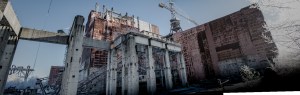
This was the immediate area around reactor number 4, the cooling tower for the next generation reactor and the half constructed reactor number 5. Reactor number 5 was 75% built at the time of the disaster and hasn’t been touched since (except liquidators that have cleaned the building 7 times since the disaster). The cranes that were used to build the reactor building still stand swinging in the wind.
The facility itself has no intentional source of natural light as it would have been lit artificially, and normally this would be detrimental to my images, however where parts of the building have rusted and fallen off, its opened up holes that allow natural light to shine through. I was lucky enough to visit at the right time of day as to let the sun shine perfectly though said holes, creating magnificent light rays across the image.
We also experienced a fair amount of wild life in this area, even encountering a timid fox that had made its home in a small derelict car.
The trees in the shade of the reactors had fascinating ice structures growing off of every single branch, giving the trees an entirely white appearance.
Image number 10 of this collection shows the entire facility, cranes and all, in one shot. From this image I don’t find it hard to imagine the building being constructed, crane arms swinging, the noise of construction and the smell of welding metal together. Now replaced with stillness, silence and no discernible smells in the air.


Location 10
Pripyat was the main city built to be independent and supply the power plant with its workers. The actual welcome sign to Pripyat was build 3 km away from the start of the city, this is because the soviet union expected the city to expand so rapidly, this was obviously prevented due to the disaster.
We initially visited a small cafe with a large stained glass window and a dreary interior. The location had a viewing deck that gave a spectacular view of the cooling pool, now frozen over as the reactors no longer maintains it’s high temperature.
I only had time to walk round a small section of a Pripyat as most of it has been closed due to many building collapsing. In 2014 the Chernobyl government ruled that it would be illegal to enter any of the building after a school collapsed and killed two stalkers. However our tour guide showed us some building she deemed as safe to view the insides.
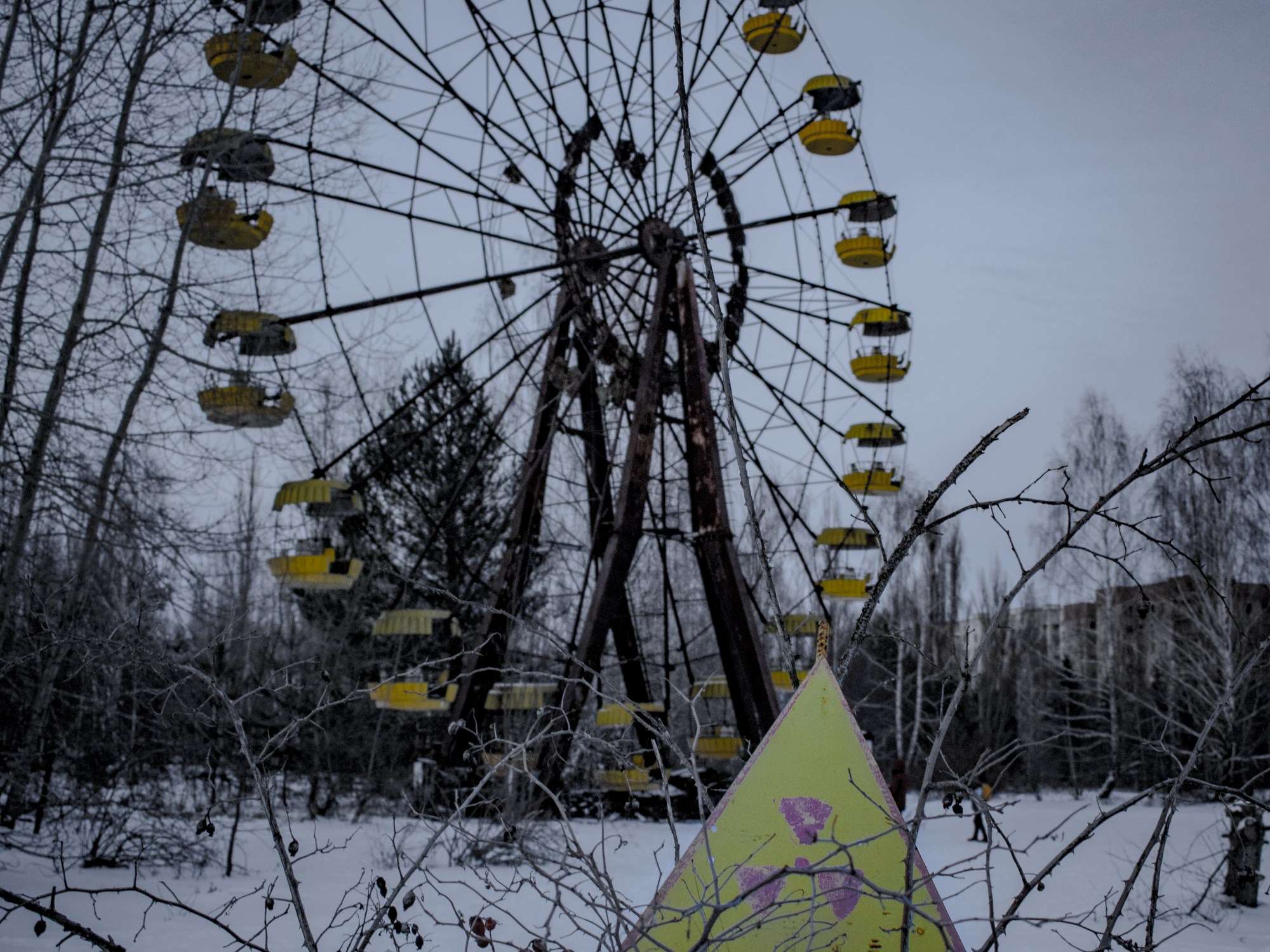
After walking around several dimly lit buildings we ventured towards the famous fair. I didn’t take many photos inside these locations as they were far to dark to produce the quality of images I was looking for. The fair itself was never officially opened to the public as it was scheduled to be opened on labour day (May 7) a few days after the disaster on the 26th of April 1986. This however does not lessen the spine-chilling atmosphere present at this fair. Something about how the whole location is exactly how it was 32 years ago is terrifying, how its trapped in time. While at this location I was able to capture very familiar images of the Ferris wheel as well as several different perspectives that many people may not have seen before. I was also able to get a interesting perceptive of the seated ride, so the chair itself is in focus but the ride itself isn’t, this was achieved by using a low F stop on the camera to focus the image on the foreground and not the background.


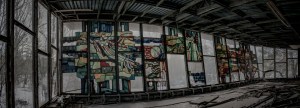
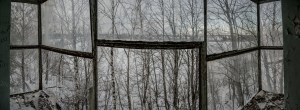
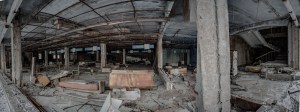
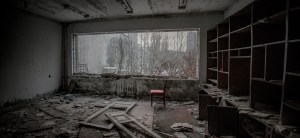
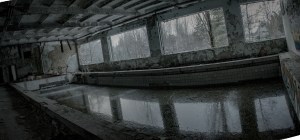
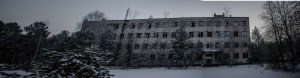
Panorama shots


Sphere Shots
Sphere shots was an experiment where I wanted to attempt to capture images in a self contained globe. This is achieved by getting a polished perfect glass square and taking a photo of it, as the light shines though it and warps around the edges, giving the illusion the image wraps round. I used my A6000 for these images with the antique lens from Poland made in the Soviet union. I did this for several reasons, initially I think there is something poetic about using a 35 year old lens made in the soviet union to take pictures of an ex soviet union country that hasn’t been touched in around 30 years. Sort if like I’m returning this lens to its home environment but using it on modern mirrosless camera. I also used this lens as its entirely manually focused, allowing me to get the perfect focus on the sphere, as I feared that in auto focus it may try to focus on my assistance hand or the background itself. The final reason I used this camera and lens is because the camera has a shorter minimum focal length than my dslr, meaning it can focus on something closer than my D3300. Allowing me to fill more of the frame with the sphere.
I am really pleased with how this sphere experiment worked out, it looks like an encapsulated environment strapped in the sphere, which further enforces the idea the whole place is trapped in time. Each photo feels like a small septate world just waiting to be freed by the glass ball shattering, like the shattering of the reactor 4 that caused this disaster so long ago.


 Time
Time 