CHRISTINA MORA
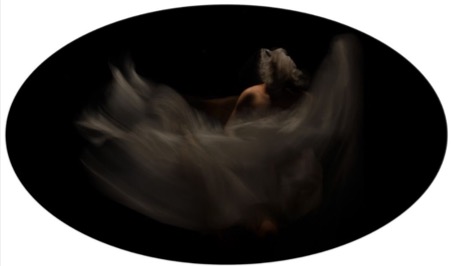
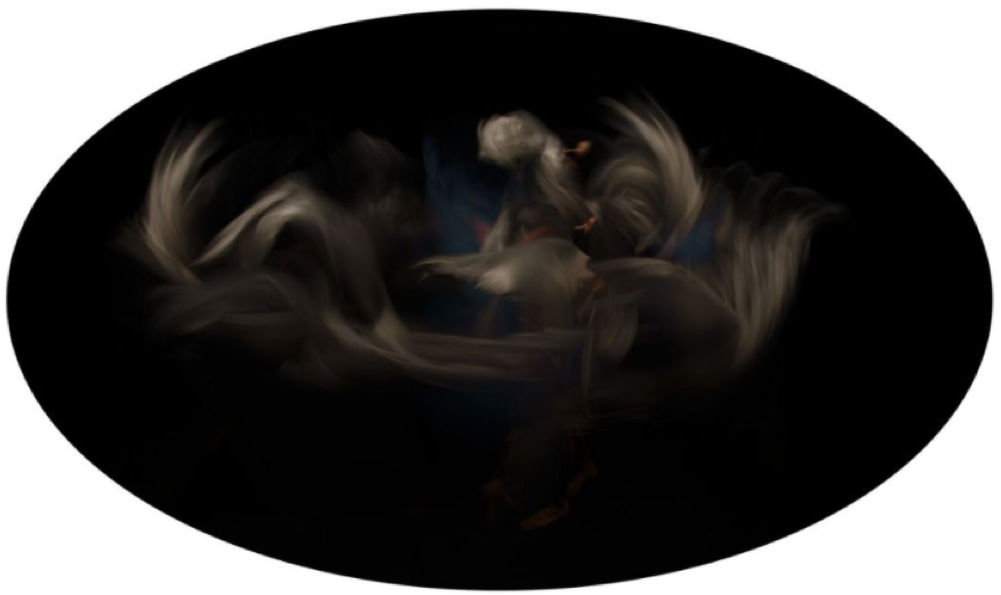
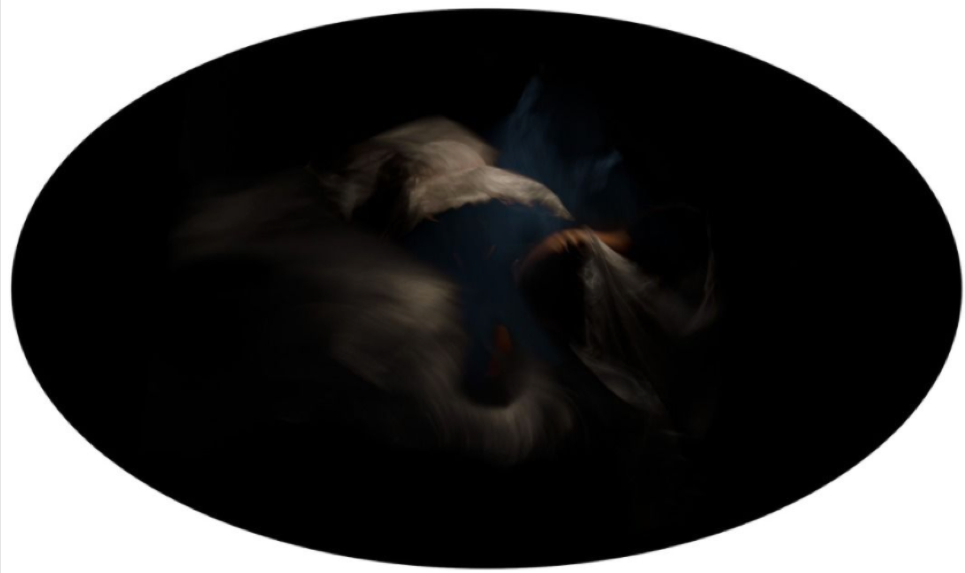
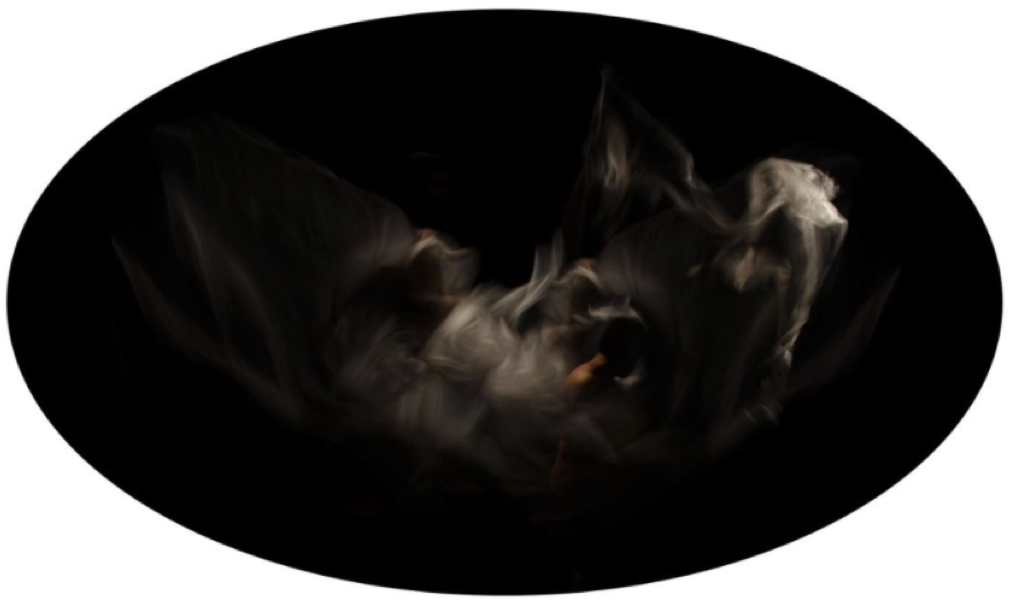
In the same way time fades, so do our illusions vanish as well. Like a vortex, everything cramped into a short time span, every feeling and memory rushes by and is gone by our next breath. We are nothing more than a wisp of air that is in constant movement. At a point it must come to an end. I explored and destroyed my own boundaries with the perception of time and space and the insignificance of myself and humanity in this vast universe.
These images are similar to my renditions as Mora also removes the edges of an image to draw focus to the centre. She has however chosen to do this by cropping the images into a oval shape, whereas I do this by vignetting the edges of my images, leaving everything black accept the centre. Mora’s work is also similar to my own in the way it looks despite being completely different. Her work shows me that if less light is used, the whispy nature of her ‘auras’ look a lot more confusing and hard to distinguish, making the images more mysterious.
Shoot 1


I liked the effect that the imperfections of the film had on my images in Dust SLR, so I decided to print out my images and physically distress them. I did this to try and recreate the extra layer of depth and tangibility that it gave the Dust SLR.


I distressed the first image by poking a hole in the picture at the lightest parts. I really liked this affect and want to try adding coloured plastic behind it, to change the colour of the holes.
In the second image I printed the picture on a ink-jet printer using laser printer paper, meaning that the image is likely to flake and fall off of the paper. Then I crumpled the paper up and flattened it back out. I like the effect this had on the image because it looks as if its been printed on tin foil, giving the images a texture and a 3D feeling.
The final image was also printed deliberately using the wrong paper. I then ribbed my thumbs in the bottom two corners, giving the image an aged feel, as if the image is fading away. I also scratched away the ink with a craft knife where the light is on the image. This further highlights the light and how it contracts the black background.
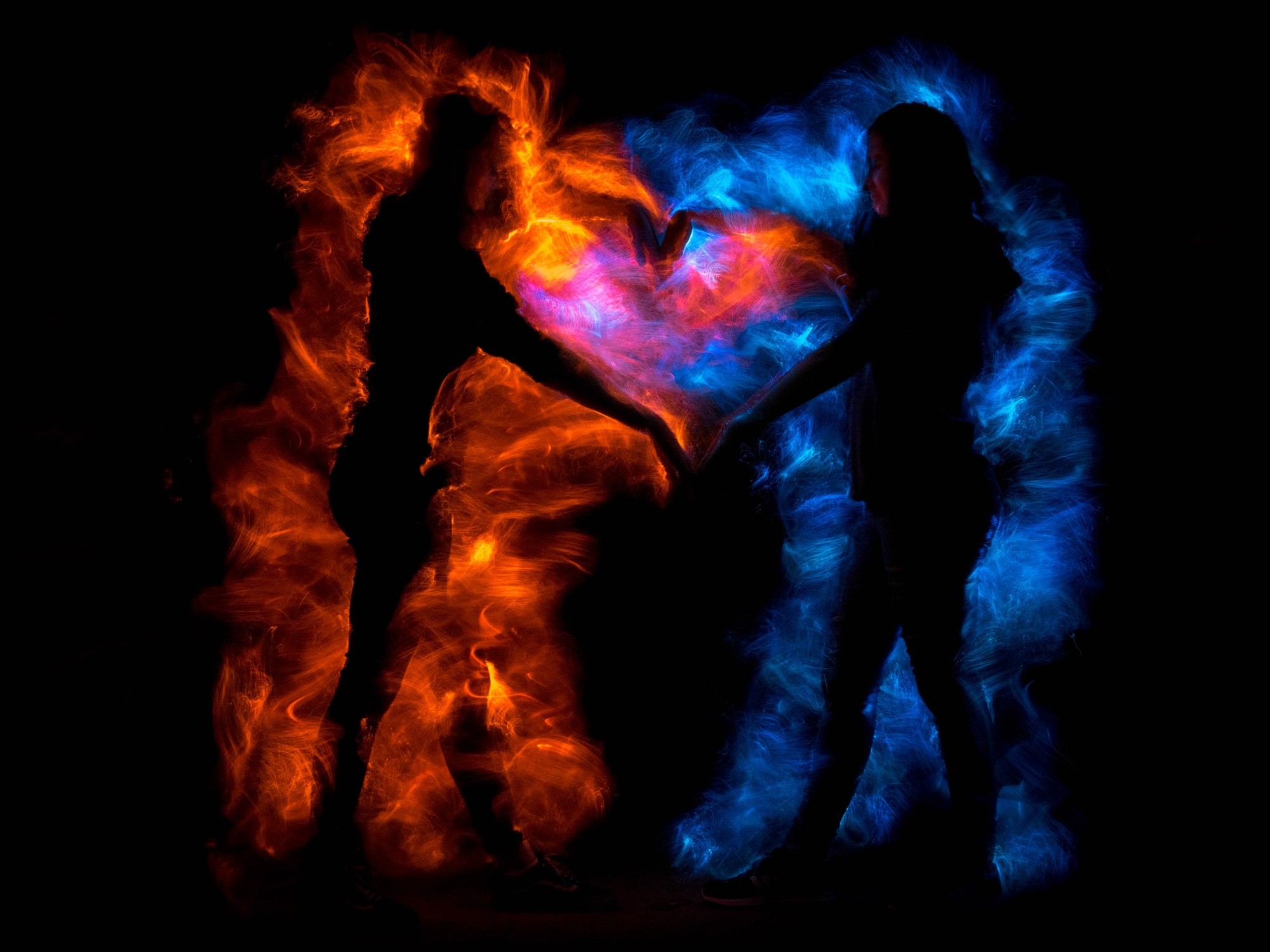
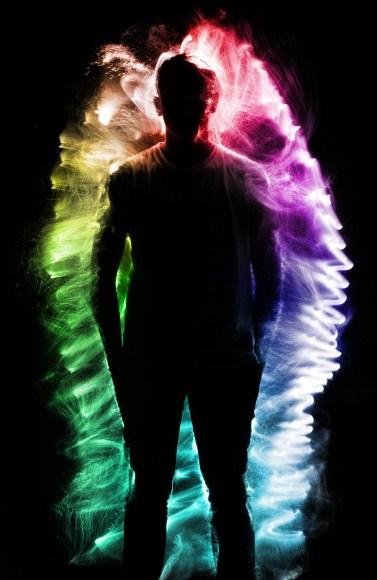
I then took one of my images into Photoshop and coloured the white fibre optic trails to see what colours I could achieve. This effect wasn’t unlike what I could create with coloured gels over the flash light. However I wondered what it would be like if I printed out all the separate colours and stuck them all together. I really liked the effect this had, however when I first attempted to scan the new image back in the scanner warped the image. Despite this I think the altered perspective was interesting so I decided to add it as well as the correctly scanned image.
After mixing all these colours together using a mix of digital and physical manipulation methods, I wanted to try and create something similar using only Photoshop. I did this simply by adding a colour gradient layer set to colour the background layer, then just added an inverse layer mask and coloured the fibre trails in.
Shoot 2


During shoot 2, I attempted to make the subject translucent. I did this by capturing the fibre light around the subject, then moving the subject out of the shot and quickly illuminating the background with a torch. This effect was used on images 2 and 3.
Shoot 3


 Time
Time 